
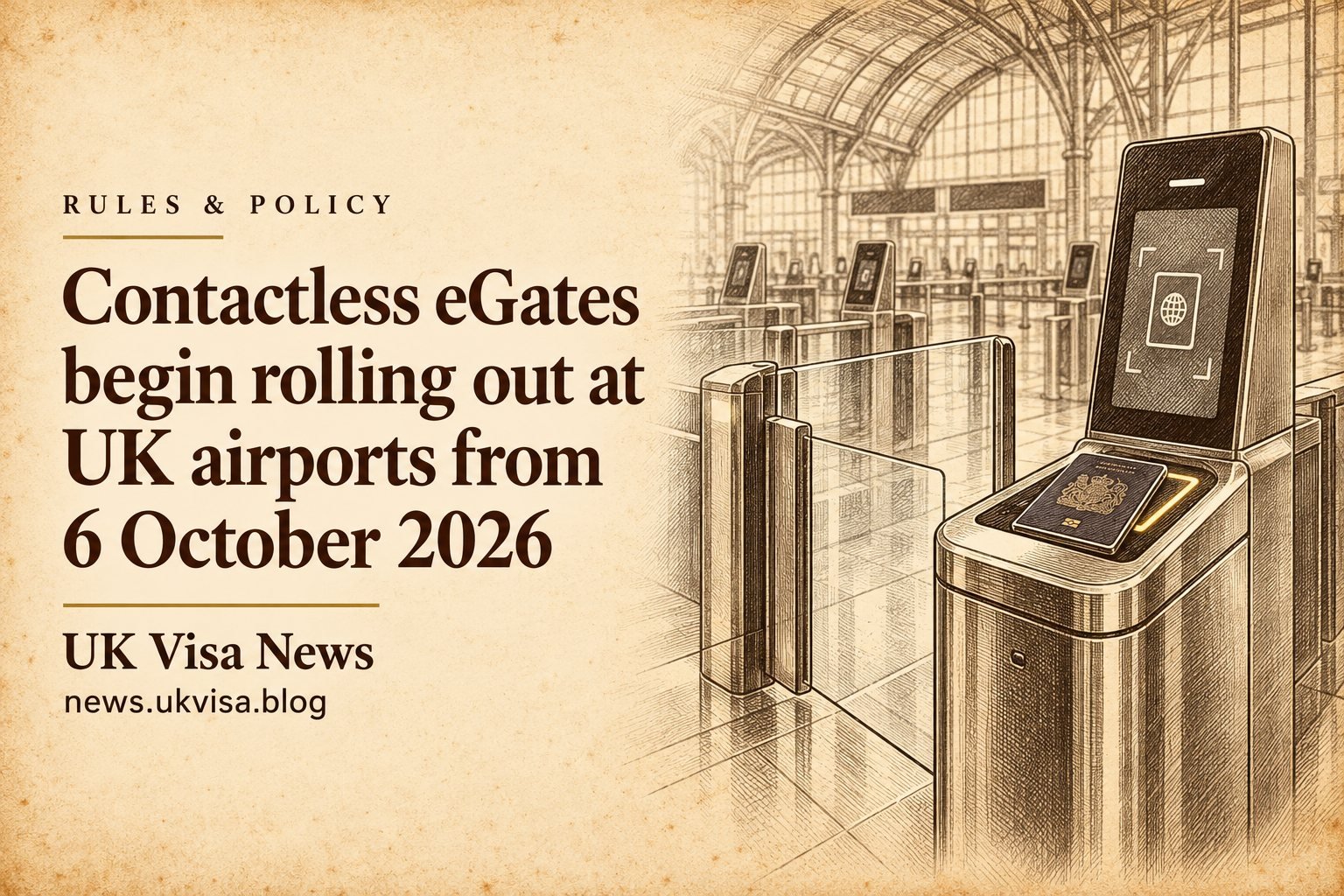
Contactless eGates start rolling out at UK airports from 6 October 2026, beginning at East Midlands Airport for British citizens, with every eGate due to be upgraded by early 2027.
The new system takes a live photo of the passenger at the eGate and checks it against verified immigration, travel and passport information. The eGate opens automatically once these checks are complete.
According to the government announcement, eGates at UK airports will switch to the contactless technology gradually from 6 October, and every eGate is due to be upgraded by early 2027. The phased rollout starts at East Midlands Airport, initially for British citizens. It will then expand to more airports and to other nationalities already eligible for eGates over the coming months.
The announcement says facial comparison technology verifies a passenger's identity before the UK's border security checks are carried out in full. Legitimate travellers can then walk through without placing their passport on the eGate reader. Testing shows the contactless system is up to 25% faster than using a passport on an eGate.
If further checks are needed, passengers will need to place their passport on the reader or may be directed to a Border Force officer, as happens today. Border Force officers will continue to monitor all eGates and offer assistance.
The announcement notes that eGates were extended this summer to children aged eight and above.
eGates are available at these UK airports: Birmingham, Bristol, Cardiff, East Midlands, Edinburgh, Gatwick, Glasgow, Heathrow, London City, Luton, Manchester, Newcastle and Stansted.
What this means for applicants
Passengers should keep their passport with them at all times. If further checks are needed, the passenger will need to place the passport on the reader or may be directed to a Border Force officer.
At first, the contactless system is for British citizens at East Midlands Airport. Other airports and nationalities follow over the coming months, so many travellers may still use the passport reader for now.
The announcement advises dual nationals to travel on a valid British passport or hold a Certificate of Entitlement to minimise any potential delay at the border.